- pantouwater
- 0 Comments
- 78 Views
1. How do these devices actually create water from “nothing”?
It’s not magic, it’s science! There are two main technologies for this:
- Cooling Condensation: This traditional method works like a dehumidifier. It cools the air to its “dew point,” causing the water vapor in it to condense into liquid. This method is simple but consumes a lot of energy and is ineffective in low humidity.
- Desiccant Adsorption: This is the more advanced method we use at Pantou Water. We utilize a nanostructured material called a Metal-Organic Framework (MOF). This material acts like a molecular sponge, absorbing moisture directly from the air. It then releases the water with a very small amount of heat. This method is far more energy-efficient and works even in dry conditions.
2. Does it work in dry climates or deserts?
This is one of the biggest advantages of our MOF technology. Cooling-based devices practically stop working when relative humidity falls below 50%. However, the Pantou Water device is engineered to produce water effectively even in low humidity conditions of 10-20%. This means you can have a stable water source in semi-arid and even some desert regions.
3. Is the water produced actually safe to drink?
Yes, 100%. In fact, it’s some of the purest water you can drink. The water production process in our device is multi-staged:
- Initial Purity: Water is first separated from the air as vapor, which is a natural distillation process that leaves many pollutants behind.
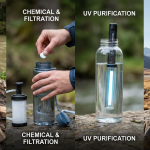
- Advanced Filtration: The condensed liquid water passes through a three-stage filtration system to remove any remaining particulate matter.
- UV Sterilization: In the final step, the water is sterilized with a UV-C lamp to ensure there are no living bacteria, viruses, or microbes.
- The Result: Water that is free from microplastics, heavy metals, chlorine, pesticides, and pathogens.
4. How much energy does it consume? Is it expensive to run?
This is a critical question. Thanks to our MOF technology, the Pantou Water device is incredibly energy-efficient. Our energy consumption is just 76 watt-hours per liter (Wh/L). For comparison, competing devices using the cooling method consume anywhere from 460 to over 1,500 Wh/L to produce the same amount of water. This high efficiency allows you to easily run the device with solar panels or the battery system in an RV or boat.
5. What does the water taste like? Does it have minerals?
The water initially produced is pure, distilled water. Since minerals are essential for health and taste, we have incorporated a re-mineralization filter into the device. This filter adds essential minerals like calcium and magnesium back into the water, giving it a fresh, natural, and crisp taste.
6. How much water can one device produce per day?
The amount of water produced depends on the device model and the ambient conditions (humidity and temperature). Depending on the model, Pantou Water devices can produce between 14 to 64 liters (approx. 3.7 to 17 gallons) of high-quality drinking water per day, which is more than enough to meet the daily needs of a small family or a group of travelers.
7. Does the device require maintenance?
Maintenance is very simple. The primary task is the periodic replacement of the filters (air filter and water filters) to ensure the water quality always remains at the highest standard. This process is similar to changing the filter in a home water purifier and can be easily done by the user.
8. Is this technology environmentally friendly?
Absolutely. AWG devices help protect the planet in two key ways:
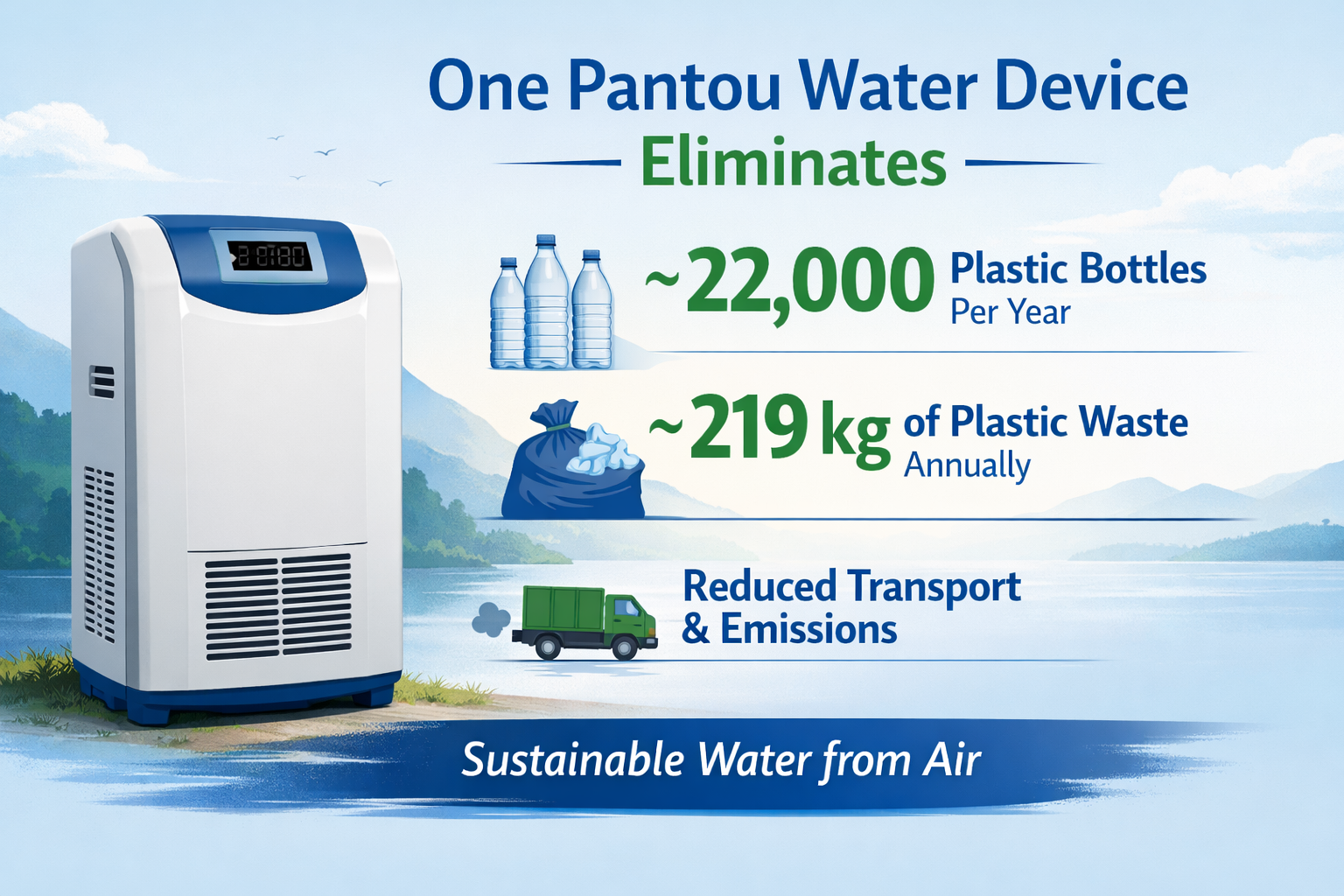
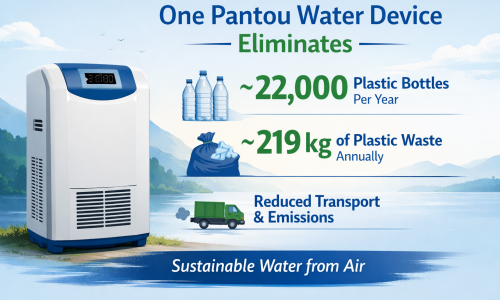
- Ending Plastic Bottles: By producing water on-site, you eliminate the need to buy and dispose of single-use plastic bottles.
- Optimized Energy Use: The high energy efficiency of our device means a smaller carbon footprint compared to the energy required to manufacture, package, and transport bottled water.
Have More Questions?
We are here to answer them. Pantou Water’s goal is to empower you with access to clean, sustainable water. Contact us or ask your question in the comments section below