- pantouwater
- 0 Comments
- 77 Views
Plastic waste is one of the most visible and damaging environmental challenges today. Single-use plastic water bottles alone account for billions of discarded items every year, many of which end up in landfills, oceans, and ecosystems.
But what does real impact look like at the level of one device?
This article breaks down—clearly and transparently—how much plastic waste a single Pantou Water atmospheric water generator (AWG) can eliminate annually.
The Environmental Cost of Bottled Water
Plastic water bottles are widely used due to convenience, portability, and inconsistent trust in local water sources. However, they come with hidden environmental costs:
- High plastic production volume
- Low global recycling rates
- Long degradation timelines
- Microplastic contamination
- Carbon emissions from transportation and storage
Even in regions with safe tap water, bottled water consumption continues to grow.
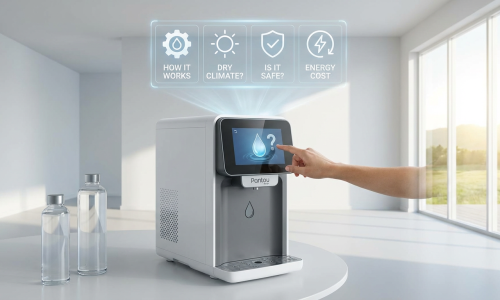
How Much Water Does a Pantou Water Device Produce?Pantou Water devices generate clean drinking water directly from the air using advanced atmospheric water generator technology.
Typical output:
- 30–64 liters per day, depending on model and conditions
For conservative impact analysis, we calculate using 30 liters per day.
Plastic Bottles Eliminated: The Numbers
Daily Impact
- 30 liters of water = 60 plastic bottles (500 ml each)
Annual Impact
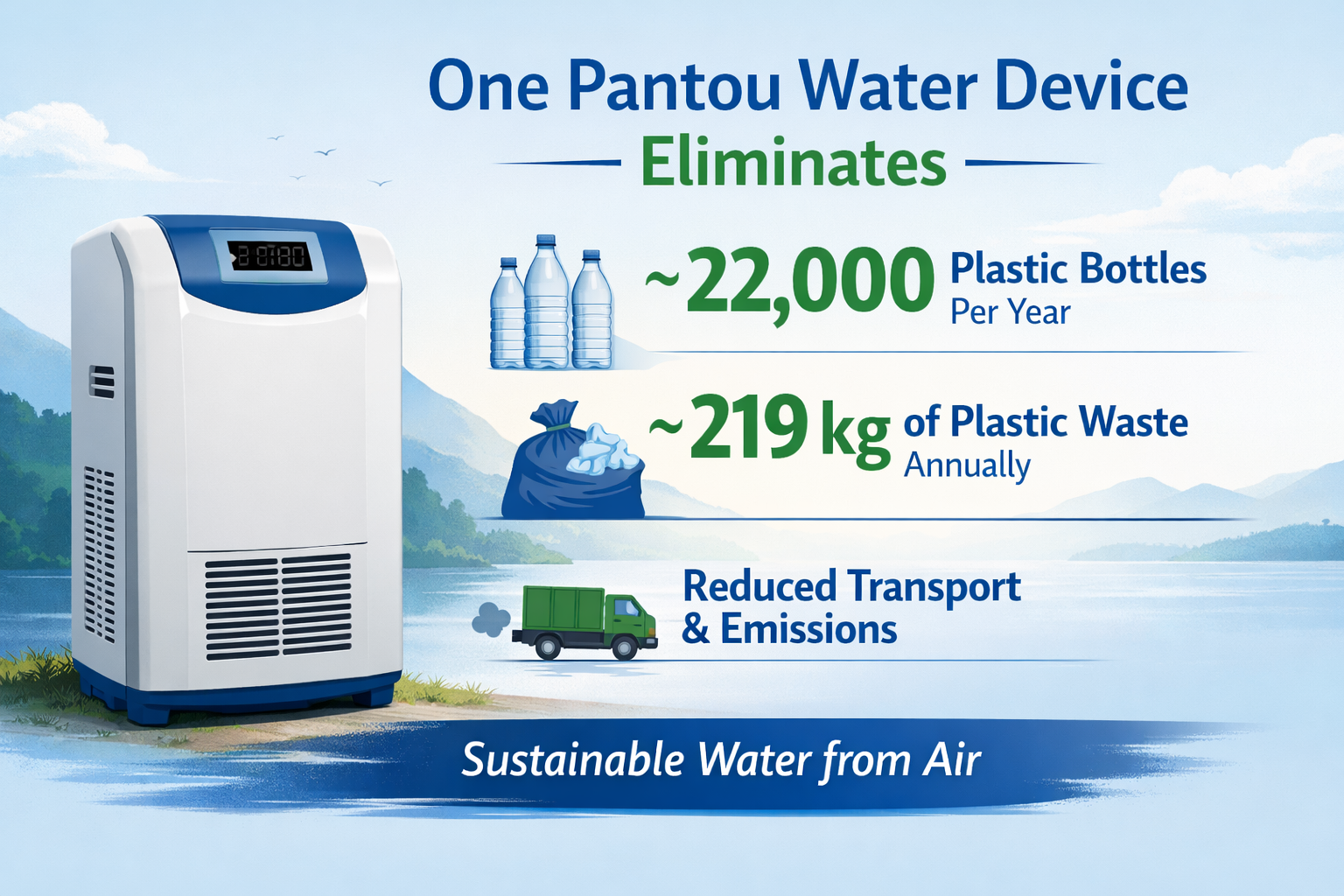
- 60 bottles × 365 days = 21,900 plastic bottles per year
✅ One Pantou Water device can eliminate nearly 22,000 plastic bottles every year.
Plastic Waste Reduction by Weight
The average plastic water bottle weighs approximately 10 grams.
- 21,900 bottles × 10 g = 219 kg of plastic annually
- Equivalent to over 480 pounds of plastic waste avoided per device per year
This plastic is never produced, transported, or discarded.
Reducing Emissions Beyond Plastic
By generating water on-site, Pantou Water devices also reduce:
- Fuel usage for water transport
- Emissions from bottling and logistics
- Refrigeration and storage energy
- Emergency water trucking in remote areas
This makes AWG systems particularly effective in:
- Remote communities
- Campgrounds and RV travel
- Eco-lodges and tourist destinations
- Disaster relief and emergency response
Eliminating Microplastic Exposure
Unlike bottled water, atmospheric water generation avoids contact with plastic packaging entirely.
Pantou Water systems use:
- Multi-stage air filtration
- UV sterilization
- Controlled mineralization
This results in water that is free from:
- Microplastics
- Heavy metals
- Packaging-related contaminants
From Linear Waste to Circular Water Access
Traditional bottled water follows a linear model:
Extract → Bottle → Transport → Consume → Dispose
Pantou Water enables a circular, localized approach:
Harvest from air → Purify → Mineralize → Consume (on-site)
No packaging. No waste stream. No plastic dependency.
Scaling the Impact
The environmental benefit compounds rapidly:
- 100 devices: ~2.2 million bottles avoided per year
- 1,000 devices: ~22 million bottles avoided per year
Small-scale deployment creates measurable change. Large-scale deployment reshapes infrastructure.
Why Plastic Waste Reduction MattersReducing plastic waste at the source is more effective than managing it after disposal. Atmospheric water generators shift water access away from disposable packaging and toward long-term sustainaility.
Pantou Water devices are not just water solutions—they are plastic elimination systems.
Final TakeawayOne Pantou Water device can prevent:
- ~22,000 plastic bottles per year
- ~219 kg of plastic waste
- Significant transport-related emissions
That’s measurable impact—every day, from a single system.